Japan TELEC Certification
Japan for radio frequency equipment certification known as Radio Equipment Type Approval, the official control body is the Japanese Ministry of Internal Affairs and Communications MIC (Ministry of Internal Affairs and Communications), the main certification body is designated by the MIC TELEC (Telecom Engineering Center), as well as RF Technologies / JQA / SGS / ITS / TUV / UL, a total of 12 certification bodies, so usually also known as TELEC certification. The main certification body is TELEC (Telecom Engineering Center) appointed by the MIC, and there are 12 certification bodies such as RF Technologies/JQA/SGS/ITS/TUV/UL, etc., so it is usually called TELEC certification, and some people call it MIC certification, RF certification, GITEKI certification, GITEKI certification, similar to the domestic SRRC certification.
Introduction to certification
Japan for radio frequency equipment certification known as Radio Equipment Type Approval, the official control body is the Japanese Ministry of Internal Affairs and Communications MIC (Ministry of Internal Affairs and Communications), the main certification body is designated by the MIC TELEC (Telecom Engineering Center), as well as other certification bodies such as TELEC (Telecom Engineering Center). Engineering Center), there are such as RF Technologies / JQA / SGS / ITS / TUV / UL and so on a total of 12 certification bodies, so it is usually also known as TELEC certification, also known as MIC certification, RF certification, GITEKI certification, technology appropriate certification, similar to the domestic SRRC certification.
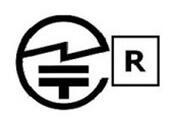
TELEC certification follows Japan's "Radio Law" (Radio Law), and specific test specifications follow the MIC (Ministry of Internal Affairs and Communications) Notice No. 88 regulations. According to the requirements of Japan's "Radio Law", in Japan, production, sales, operation of wireless equipment, must comply with the technical regulations approved by the MIC, and mandatory application for radio equipment for type approval certificate (i.e. TELEC certification).
TELEC certification basic information
Whether mandatory: mandatory certification
Factory inspection requirements: No requirements, but the need for ISO certificates or recognized quality control documents
Licensee requirements: No requirements
Certificate validity: No
Certification period: about 4 weeks
Technical Information: Voltage Frequency AC 100V/200V , 50Hz /60Hz, Plug JIS 8303
Explanation of TELEC certification, GITEKI certification, MIC certification, and MARK certification.
-TELEC Certification and GITEKI Certification
Japan TELEC full name TELECom Engineering Center, is recognized by the Ministry of Internal Affairs and Communications of Japan, "Airwave Act" of the licensing agency, in 2014 TELEC organization also obtained the "Electrical Communication Business Act" of the certification qualification, now commonly known as TELEC certification is equivalent to GITEKI certification.
-TELEC certification and MIC certification
Japan's Ministry of Internal Affairs and Communications, referred to as MIC, the full name of the Ministry of Internal Affairs and Communications, the Ministry of Internal Affairs and Communications for the Japanese "Airwave Law" and "Electrical Communication Business Law" regulatory bodies, in general terms, MIC certification is equivalent to TELEC certification.
-TELEC Certification and MARK Technology Adaptation Certification
TELEC certified products can be printed with the GITEKI logo, GITEKI from the Japanese name for the certification: "GITEKI マーク", the Japanese character GITEKI Roman spelling GITEKI, so GITEKI certification is also known as GITEKI certification, GITEKI certification and GITEKI certification is just a different name. GITEKI Certification and Giteki Certification are just different names.
Classification of Certification
TELEC certification includes Test Certification and Type Certification. Test Certification is valid for each unit of equipment, and the certification is only valid for each unit of equipment that has been validated;
Type Certification refers to the same design and manufacture of a batch of equipment samples for verification, the certification of the batch of equipment are valid, but if the design or manufacture of the equipment has changed, the equipment will need to be re-certified.
It is important to note that for the use of non-low power radio stations and their terminal equipment a license is required from the MIC. In addition, there are two types of compliance certification for telecommunications terminal equipment:
- For ordinary telephone equipment, JATE certification is required in accordance with the Telecommunications Business Law;
- For wireless terminal equipment, in addition to the JATE certification required by the Telecommunications Business Law, TELEC certification is also required by the Radio Law.
Applicable product range
TELEC certification for radio frequency products including: Bluetooth products, ZigBee products, telemetry, WiFi products, wireless microphones, pagers, LTE-RFID (2.4GHz, 920MHz) products, UWB radio systems, GSM products and so on.
Application Process
1、Fill out the application form, prepare information and samples
2、Testing organizations review the information and preliminary test samples
3、Testing organizations formally apply to the Ministry of General Affairs MIC-accredited institutions
4、Agency review of documents
5、Sample testing, provide test reports (can be tested by authorized laboratories)
6、Documents and test reports passed by the Japanese MIC to issue a license
Application materials
1、Technical model specification sheet
2、Quality management system statement
3、Quality control confirmation method or manufacturer's ISO 9001 certificate
4、Construction bond confirmation
5、Rated power statement
6、Antenna report
7, test report including test results, test setup photos and inspections conducted)
8, Block Diagram, Schematic, Bill of Materials, Parts Placement, IC Data Sheet, Interior and Exterior Photographs, Product Description, Owner's Manual, Operating/Technical Instructions, Accessory Description)
9, labeling information label location, label content)
10, if you act as an agent or authorized representative of the manufacturer also need to trust/authorization letter
Certification Fee
TELEC certification costs vary according to the product and function, such as products with Bluetooth, WIFI function, 2.4GHz function, how many different functions, the cost is also different, and even Bluetooth single-mode and dual-mode is different, the cost is also different. Specific TELEC certification cost issues need to be evaluated after the offer, most of the common products TELEC certification offer is 10,000 yuan.
Other
Bluetooth and WIFI product testing requirements
Test certification is for each device unit to verify that the certification is only valid for each verified device unit; WiFi and Bluetooth products and its test items are basically similar to the European standard EN300 328. The standard used for 2.4GHz WiFi products (802.11b/g, 2412~2472 MHz) and Bluetooth products is MIC Notice No.88 Annex43, but for 2.4GHz WiFi products, Channel 14 (2471~2497 MHz) needs to be tested and certified separately. However, for 2.4GHz WiFi products with channel 14 (Channel 14: 2471 ~ 2497MHz), it is necessary to use Annex44 to conduct tests and issue reports separately, and the corresponding fee is also increased. For 5GHz WiFi products (802.11a, 5180~5320MHz, W52 Band and W53 Band), the test standard is Annex45, but it should be noted that the MIC will modify Annex45 in the near future to include the 5.6GHz devices (Band W56) and have a more stringent requirement for the Band 56 band. Band 56 band has more stringent DFS test requirements.
Bluetooth product test content
1、Frequency Error Measurement
2, coupled bandwidth / carrier bandwidth test (Occupied Bandwidth and Spread-spectrum Bandwidth / Factor)
3, stray harassment test (Unwanted Emission Intensity Measurement)
4, antenna power error test (Antenna Power Error Measurement)
5, receiver stray harassment test (Limitation of Collateral Emission of Receiver Measurement)
6, EIRP antenna power test (Transmission Antenna Gain (EIRP Antenna Power) Measurement)
7, 3dB wave bandwidth test (Transmission Radiation Angle Width (3dB Beamwidth) Measurement)
8, duty cycle test (Duty Cycle Measurement)
9, occupancy time test (retention time)